


Marble and the sea: stone in the ancient Mediterranean
After Egypt, our journey through the history of stone crosses the Mediterranean. Quarries, ports and cities formed networks in which materials travelled alongside the knowledge of the people who extracted and shaped them.
ISLANDS OF MARBLE
Naxos and Paros in the Cyclades were important sources of Greek marble. Mount Pentelikon near Athens supplied stone for celebrated works. Each quarry had its own character: colour, available dimensions, quality and transport all influenced the choice.
FROM MOUNTAIN TO BUILDING SITE
Quarry workers identified a block and cut around the portion to be detached. Once separated, it could be roughly shaped before transport. Moving heavy stone to the coast, loading ships and reaching a building site required organisation, equipment and many hands.
THE PARTHENON
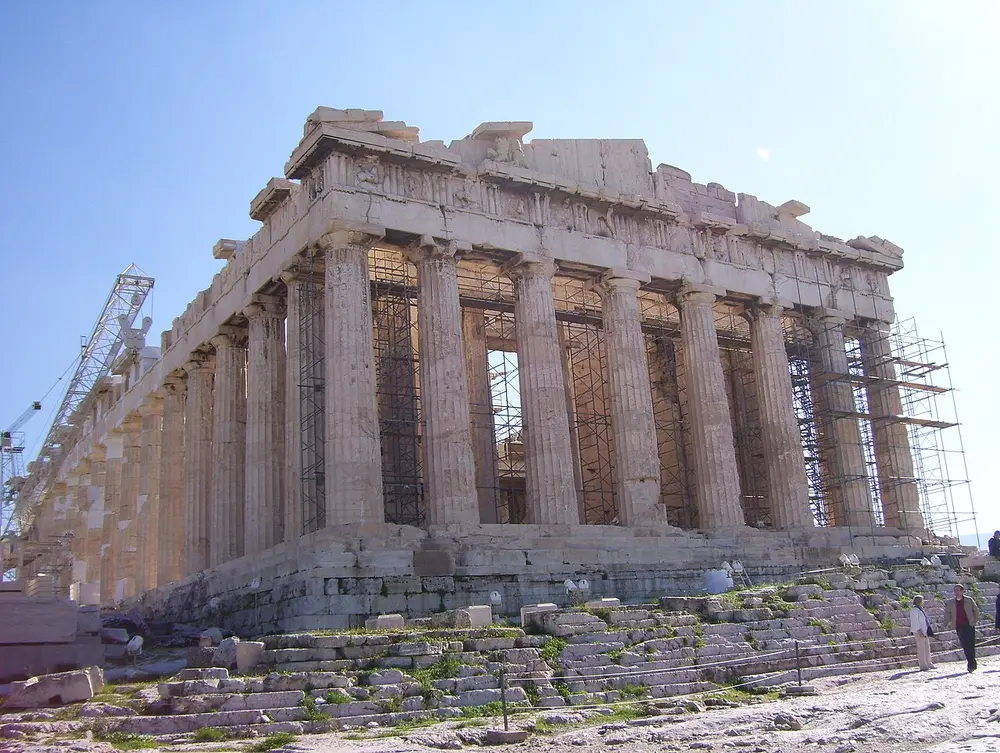
The Parthenon in Athens, built in the fifth century BCE, shows the connection between quarry and architecture. Pentelic and Parian marble were used for the monument. At the building site, blocks were given their final form as columns, architectural elements and sculptures.
STONE AND COLOUR
Ancient temples are often imagined as white. Many sculptures and architectural details were originally painted. Marble was also the ground for works more colourful than the surviving stone might suggest.
ROME AND THE MEDITERRANEAN
Under Rome, supply networks extended across the Mediterranean. Stone from different regions appeared in buildings and monuments. It communicated prestige while also revealing routes, ports, trade and labour. A finished surface was the outcome of decisions stretching from quarry to building site.
A STORY THAT CONTINUES
People working with blocks today still recognise the questions: which stone to choose, how to extract it, how far it can travel and which use best reveals its qualities? Machines change, but knowledge of the material remains fundamental.
Sources: Metropolitan Museum of Art, Architecture in Ancient Greece; Greek Art from Prehistoric to Classical; Augustan Rule.