

Stone for eternity: quarries and craftspeople in ancient Egypt
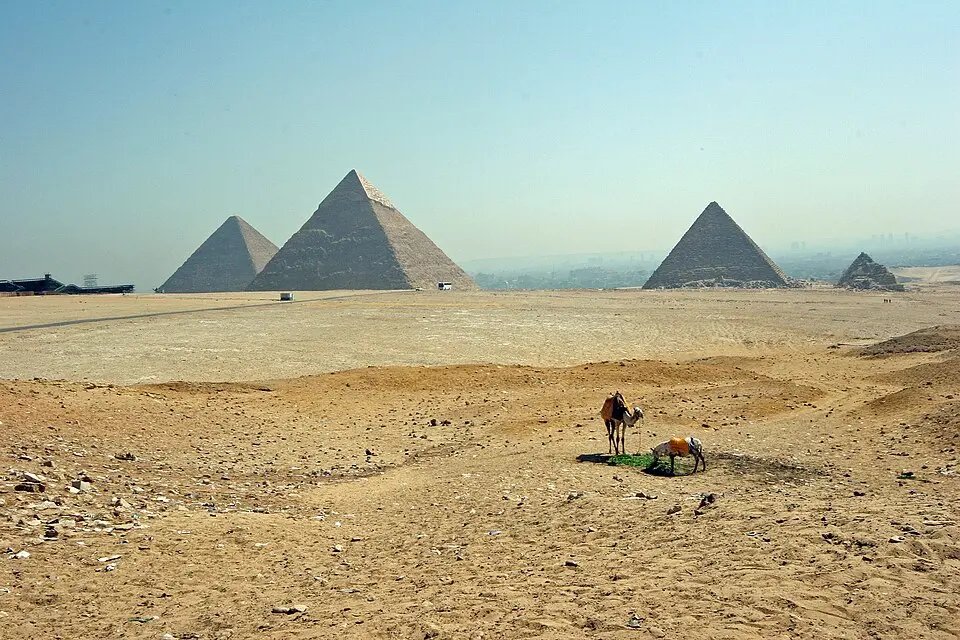
After prehistoric tools and monuments, our history of stone reaches the Nile valley. In ancient Egypt, building in stone served the present and an imagined future beyond a human lifetime. Pyramids, temples and statues speak of belief and power, but also of the organisation of work.
A LAND OF DIFFERENT STONES
Egyptian builders used different materials. Limestone was widely used in construction; granite from Aswan in the south provided hard, durable stone for architectural elements, statues and other objects. Quartzite and sandstone served other purposes. Availability, material properties and the meaning of a commission all influenced the choice. A single monument could bring together stones from different places and different working traditions.
FROM QUARRY TO RIVER
A monumental block had to be separated from the rock, prepared for travel, moved and installed. The Nile connected quarrying areas with distant building sites. Boats helped, but transport still required people, equipment and careful coordination.
The palm column from Sahure’s pyramid temple, now at the Metropolitan Museum of Art, provides a concrete example. Carved from a single block of Aswan granite, it travelled downstream to Abusir, more than 800 kilometres away. It reveals a network of quarries, transport, craftspeople and patrons.
TOOLS AND ABRASIVES
Working limestone and working granite presented different challenges. Craftspeople adapted tools and processes to the stone and the intended shape. Research and experiments show the importance of abrasives in sawing, drilling and finishing hard stones. Some details remain debated: ancient techniques do not all have definitive explanations. A polished surface represents time, repeated gestures and close knowledge of the material.
FROM WOOD TO STONE
Some Egyptian architectural forms recall lighter materials. Sahure’s column evokes a pole topped with bound palm fronds: wood, leaves and rope translated into granite. Stone gave an earlier form a durable monumental role.
THE PEOPLE BEHIND THE MONUMENTS
Pyramids and temples also tell the story of those who quarried, transported, carved and organised. Sites needed supplies, knowledge and continuous management. Remains of quarries, ramps and workers’ settlements help archaeologists reconstruct this world, even where individual names are unknown.
THE STORY CONTINUES
In our first article stone was a tool and a collective monument. In Egypt it also appears as part of a complex chain: selected, extracted, transported and shaped for a project. In the next chapter we follow stone into the Mediterranean and explore quarries, cities and new forms of architecture.
Sources: Metropolitan Museum of Art, Palm Column of Sahure: ; Ancient Egyptian Technology: ; Dahshur: